
6 Non-Bookkeeping Tips for Becoming Tax-Ready
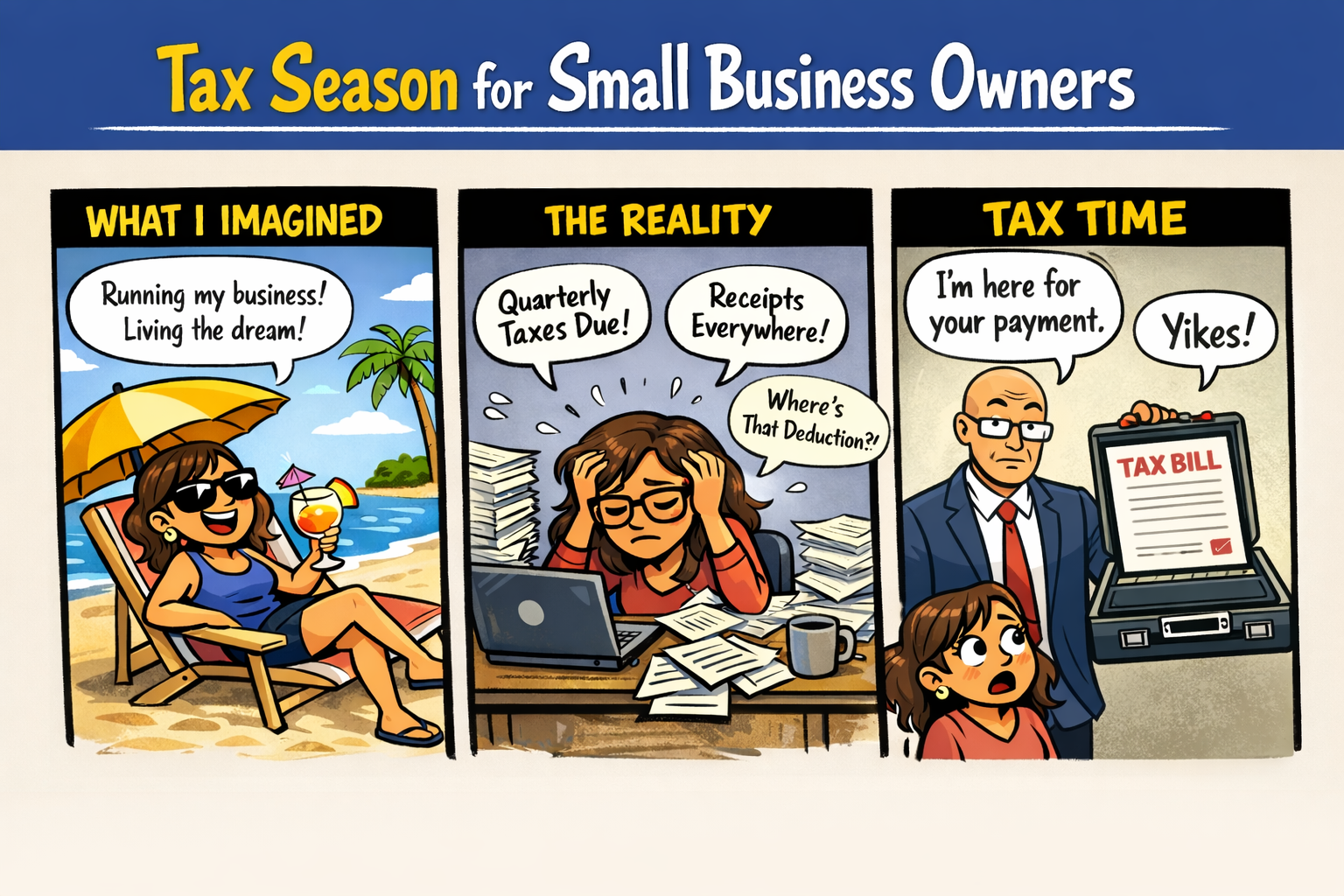
Yes, the briefcase can speak.
I think because I started in accounting under a CPA doing tax prep work, I have a strong internal compass guiding me towards making sure bookkeeping is tax ready. As a business owner you need to know what your numbers are for many reasons that have nothing to do with taxes. However, tax time rolls around and suddenly you’re scrambling to make sure everything is entered and correct? Do you have that document? Did you update that transaction that came in incorrectly? Do your books make sense?
As a bookkeeper my goal is to make your numbers make sense. We want clean, tax ready, accurate books that you can hand over to a CPA or a tax accountant without any concern that something is in the wrong place or you've missed something.
That being said here are a couple of non-bookkeeping specific tips as we are mid-tax season right now and getting closer to April 15th daily.
Stop running personal and business expenses through the same account.
As an entrepreneur, I understand the necessity when your business is very small. You don't feel like you can open a business bank account yet because it doesn't make sense or you don't have the money available to keep the bank account open since you have no revenue.
However, when you mix your business and personal expenses it becomes a game of “guess what this charge is” for YOU. Avoid this and just open a business account and keep all business expenses in there.
Organize your supporting documents.
The best way to go about this is to just have a designated folder/ envelope/ drawer where all of your business documents live. Ideally these would all already be electronic documents and not physical documents but even your PDF's and photos of receipts need to be labeled correctly. If you have 12 photos of the same thing, delete the 11 that don't make sense.
The documents that you should be tracking and holding on to until your CPA tells you otherwise is:
loan statements
vehicle purchases and sales
equipment purchases
lease agreements
new credit card and bank info
grant documentation if applicable
prior year tax returns
…and anything else that might have a tax impact
Verify your 1099 contractors
Make sure that you have the necessary W-9s (easiest to get these at the time of setup) for anyone who is being paid over $600.00 for independent contactor services.
Make notes about things that are out of the ordinary such as:
Buying or selling business assets
Taking out new loans
Changing your entity structure
Starting a new revenue stream
Working in another state
Having a large inventory change
…and anything else that might have a tax impact. Your CPA cannot help you if they do not know that something doesn't exist.
I think as business owners we often forget that our personal lives impact our business and vice versa.
Marriage, divorce, having a baby, buying or selling a home, moving states, and large medical expenses all impact your tax strategy. If you have all of this stuff ready to go your CPA/ tax accountant will be able to get you the most out of your taxes.
And finally, stop waiting until March or April to get everything ready. 😅
If everything is ready to go in January your CPA has so much more time to do the things that they need to do.
Prepare a strategy
Make necessary adjustments or journal entries
Talk about estimated payments
Consider retirement contributions, etc.
So do yourself and your tax accountant a favor and reconcile those books, get your documents ready, and get taxes finished!
